
Concussion
An assessment of thinking, memory and processing after a concussion, especially when symptoms continue longer than expected or make a return to work, school or sport uncertain.
Book an Assessment →Neuropsychological Assessments
A concussion, a brain injury or a serious illness can change more than a scan shows: concentration, memory, the pace of thought, and sometimes the sense of who you are. A neuropsychological assessment maps what has changed and what has remained strong.

An assessment of thinking, memory and processing after a concussion, especially when symptoms continue longer than expected or make a return to work, school or sport uncertain.
Book an Assessment →A comprehensive assessment after a brain injury, describing changes in thinking, emotion and daily functioning, and the strengths that recovery can build on.
Book an Assessment →An assessment of memory changes, separating what is part of ordinary ageing, stress or mood from changes that need further attention.
Book an Assessment →An assessment of concentration, divided attention and mental stamina when keeping focus has become noticeably harder than before.
Book an Assessment →A broad assessment of reasoning, language, visual-spatial skills, processing speed and executive functions, when an illness, treatment or medical condition may have affected thinking.
Book an Assessment →When an injury or illness changes how you think, work and relate to others, it can also change who you feel you are. Many people say they are no longer the person they used to be. This assessment looks at how changes in thinking, emotion and daily life have affected your sense of self, your roles and your confidence, and at the strengths that remain to rebuild on.
Book an Assessment →
If some of these feel close to home, you are in the right place.
We describe both what has changed and what has remained strong, because recovery is built on the strengths that are still there.
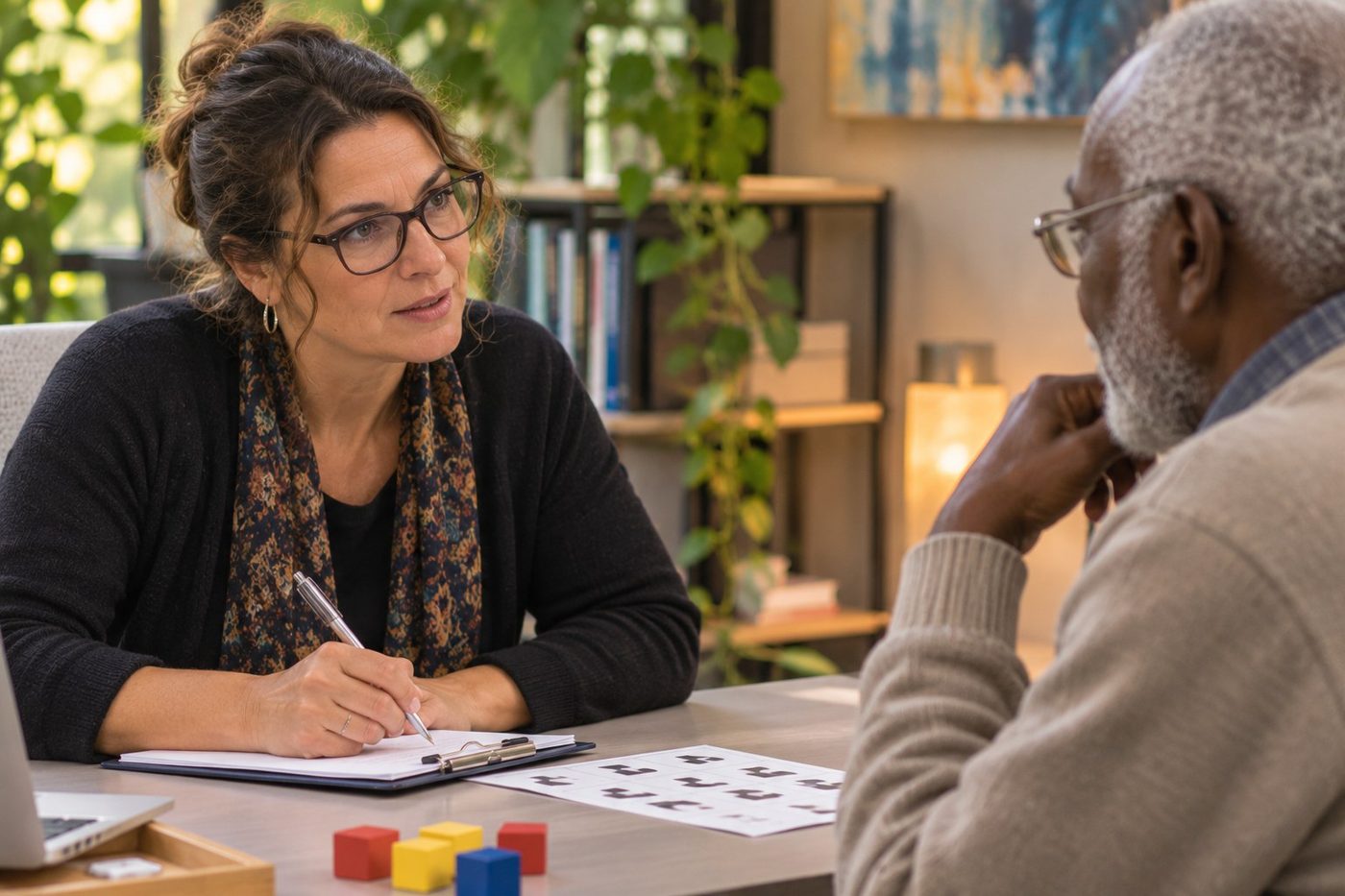
A detailed interview about the injury or illness, your symptoms, your history and your goals for recovery.
Standardized testing of attention, memory, language, reasoning and processing speed, with breaks to manage fatigue.
Results are interpreted in light of your medical history and your life before the injury.
We explain what has changed and what remains strong, and what this means for recovery, work and daily life.

Tell us what you need and how to reach you. We reply the same day, and always within 24 hours.